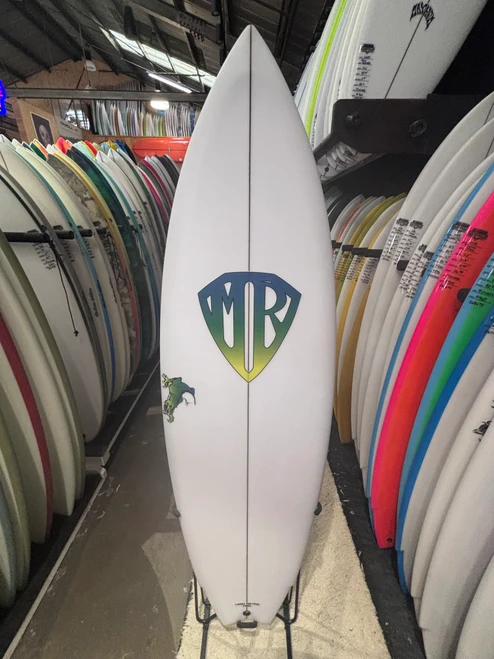
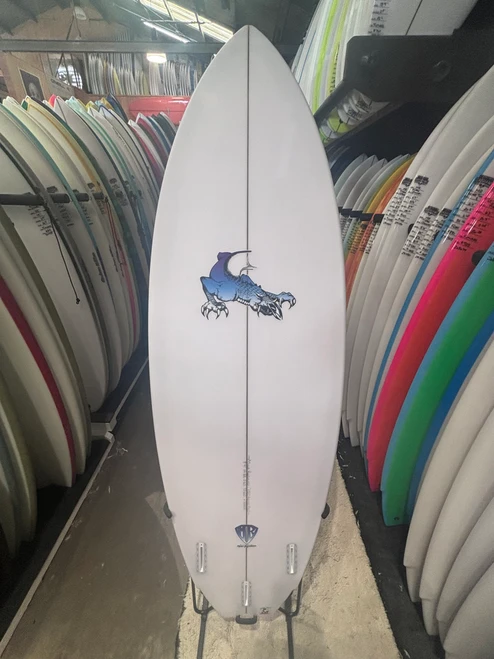
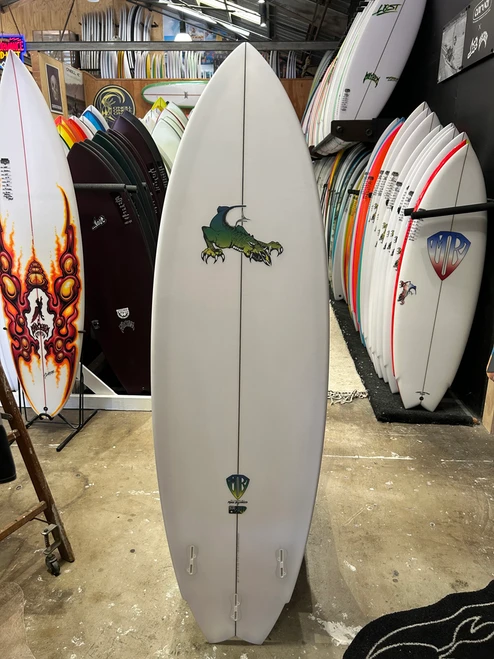
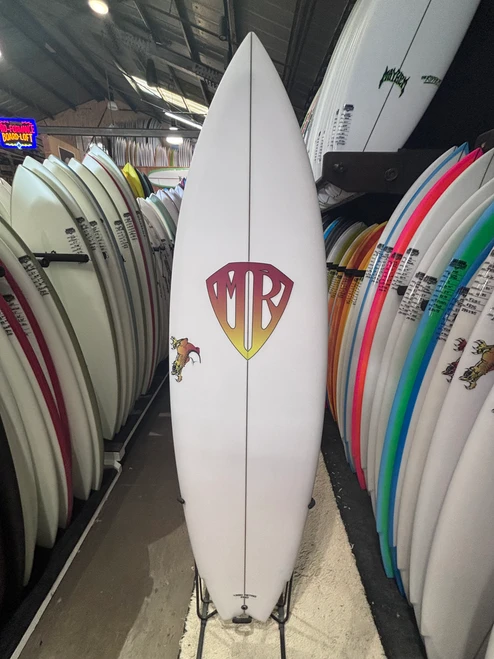
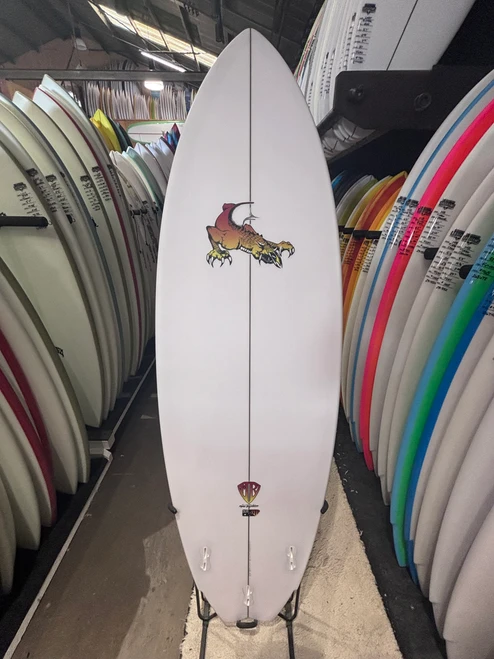
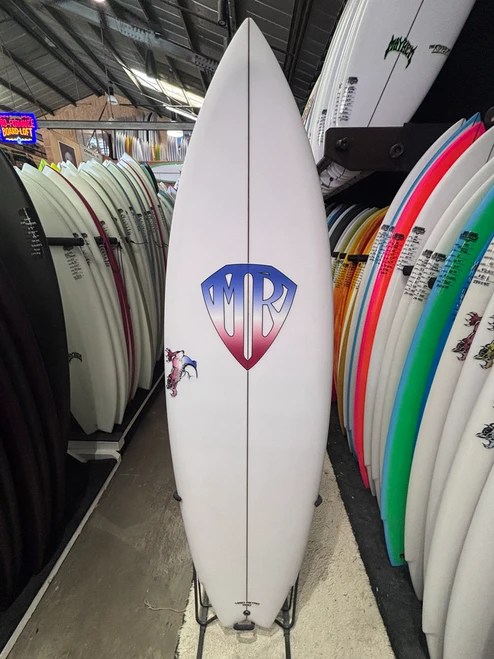
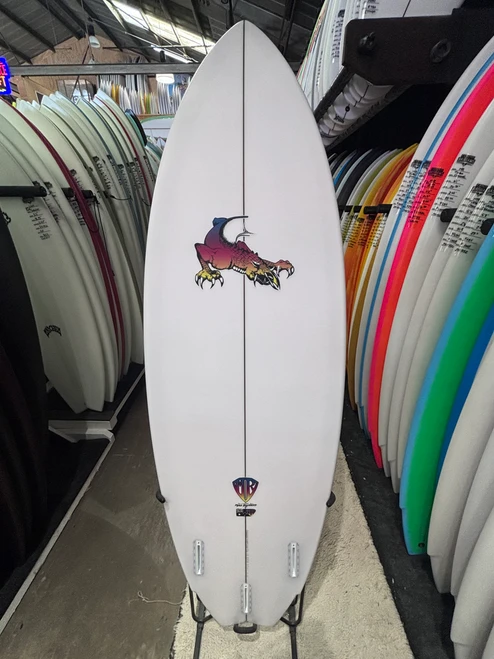
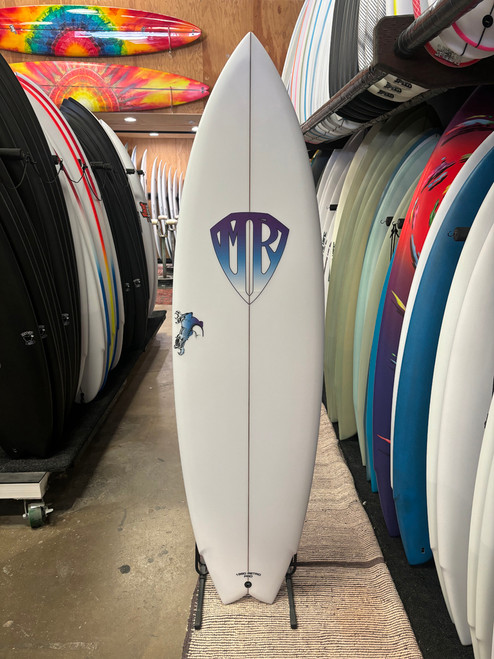
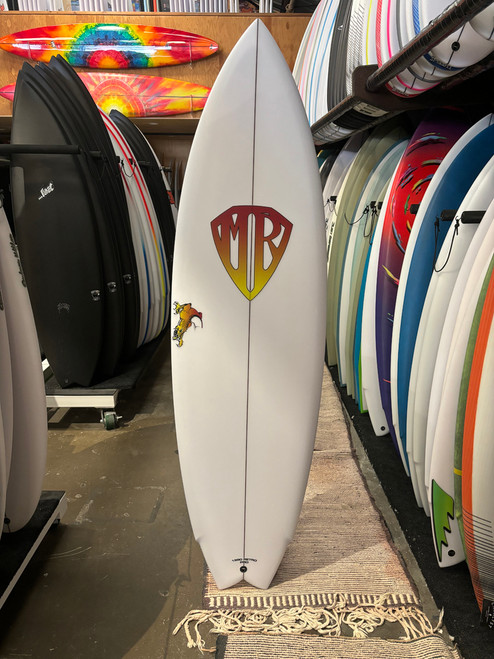
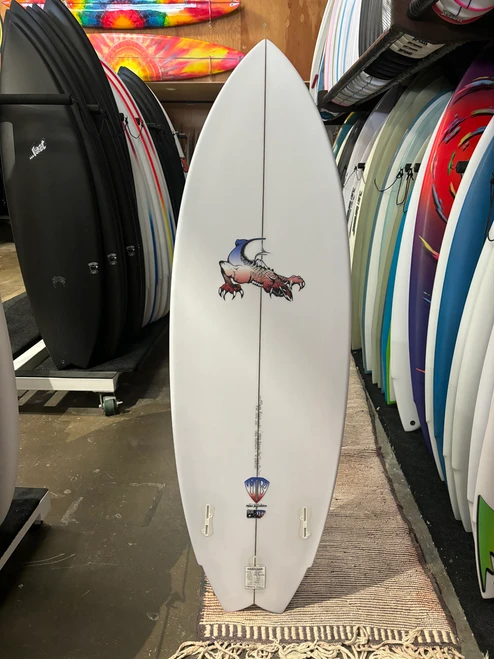
1980 Retro Pro Quick Facts
Mark Richards 1980 Retro Pro quick facts
| Brand / shaper | Mark Richards Surfboards, designed by four-time world champion Mark Richards; built in the USA by …Lost Surfboards |
|---|
| Based on | Mark Richards’ most popular retro model, the 1980 Retro Twin Fin: same retro rocker, vee bottom, fluted wings and thickness distribution, with the outline modified to a narrower nose and a wider, more curved tail |
|---|
| Board type | Retro twin-fin shortboard: “fast, loose, and a blast from the past” |
|---|
| Best waves | Thigh-high to slightly overhead; a daily driver for everyday surf around town |
|---|
| Skill level | Beginner, intermediate and advanced surfers |
|---|
| Tail | Winged swallow with fluted wings |
|---|
| Design | Retro rocker and thickness distribution with a vee bottom; MR reports the feedback on this model has been 100% positive |
|---|
| Fins | 2+1: twin fins with a small stabiliser (FCS II or Futures boxes). Best template: Mark Richards’ own twin + trailer set. Try the FCS II MR Twin + 1 or the Futures Mark Richards Twin+1. |
|---|
| Stock sizes | 5’4 to 6’4 (28.00 L to 39.50 L) |
|---|
| Sizing | Shorter and wider than your regular shortboard, with 1 to 2 L more volume; about 4" to 6" shorter than a standard performance shortboard |
|---|
| Constructions we stock | PU (poly), built by …Lost Surfboards |
|---|
| Custom orders | Yes, through our Mark Richards 3D board builder |
|---|
1980 Retro Pro Q&A
What size 1980 Retro Pro should I get?
The 1980 Retro Pro carries retro thickness and a wide tail, so ride it like a fish: shorter and wider than your regular shortboard, with a tad more volume, and we recommend 1 to 2 liters more. Comparing stock dims, that works out about 4" to 6" shorter than a standard performance shortboard of the same volume. For example, if you ride a 5’11 shortboard at about 28.5 L, look at the 5’5 (19 3/8" x 2 1/2", 29.00 L), or the 5’6 (19 1/2" x 2 5/8", 30.70 L) if you want a bit more foam. Stock sizes run from 5’4 (19 1/4" x 2 1/2", 28.00 L) to 6’4 (20 3/4" x 2 3/4", 39.50 L). Our shop staff can help you pick a size.
What fins does the 1980 Retro Pro use?
The 1980 Retro Pro runs Mark Richards’ 2+1 layout: two twin-fin boxes up front with a small stabiliser box behind (FCS II or Futures, or glassed-on fins by custom order). Mark Richards says the standard fin set-up is twin fin plus stabiliser, and the board can be custom ordered with glassed-in twin fins. The natural choice is MR’s own signature set: on FCS II the MR Twin + 1 (Medium-Large), Mark Richards’ twin + stabiliser template built for drive and speed with a small centre fin that adds control; on Futures, the Mark Richards Twin+1 is the same set. FCS sizes these fins by weight: Small 120–155 lbs, Medium 145–175 lbs, Large 165–200 lbs. Futures sizes its fins as Small 95–135 lbs, Medium 125–175 lbs and Large 165 lbs and up.
How is the 1980 Retro Pro different from the 1980 Retro Twin Fin?
It is an update on Mark Richards’ most popular retro model. The Retro Pro shares the 1980 Retro Twin Fin’s retro rocker, vee bottom, fluted wings and thickness distribution; the main difference is the outline, modified to incorporate a narrower nose and a wider, more curved tail. The result, in MR’s words, is fast, loose and a blast from the past.
What waves is the 1980 Retro Pro for?
Everyday surf. It is a daily driver that excels from thigh-high to slightly overhead, and because it is fast and loose it stays fun in the average waves you surf around town.
Who is the 1980 Retro Pro for?
Beginners, intermediates and advanced surfers alike. The retro volume and wide tail make it easy to paddle and catch waves on, while the vee bottom and fluted wings keep it loose and lively for experienced surfers who want a twin-fin feel.
What construction does the 1980 Retro Pro come in?
We stock the 1980 Retro Pro in PU (poly), built in the USA by …Lost Surfboards, which produces Mark Richards’ models. Each in-stock board on this page lists its construction and fin boxes (FCS II, Futures or glassed-on fins).
Can I custom order a 1980 Retro Pro?
Yes. Use the Custom Order 1980 Retro Pro button on this page, or open the Mark Richards 3D board builder directly, to design one: you choose the dims, fin set-up (including glassed-in twins), colors and art.